
 These days, parents, teachers, and other trusted adults are very aware of how technology can capture the attention and focus of children and teens. According to recent data from Stanford University, 90% of youth have a smartphone by age 14, with the majority getting one by age 12. Access to social media follows soon after, with 56% of young people creating their first account by age 12.5. Young people have online access earlier than ever—but do they have the skills they need to use it responsibly?
If you ask a 6th-grade teacher or a middle school principal about one of the biggest issues they face, they will likely mention group texts or social media posts where students share hurtful or inappropriate pictures and comments, or use platforms to embarrass and exclude others. If you are a parent of a tween or teen, one of these situations may unfortunately sound familiar:
- A group of friends creates a new chat and intentionally leaves one person out, then discusses personal information about that person.
- After a disagreement, a student posts a mean comment about a teacher or classmate in a group chat, and it begins circulating throughout the grade.
- Friends in a group chat pressure a student to share a private photo or reveal a secret told in confidence.
- Someone forwards a screenshot of a private conversation to a larger group chat to create drama.
Situations like these make it clear that young people need more support in learning how to message and use social media responsibly. Because their brains are still developing—particularly the frontal lobe, which helps with decision-making and impulse control—many young people benefit from clear, simple guidelines they can follow before sending or posting messages.
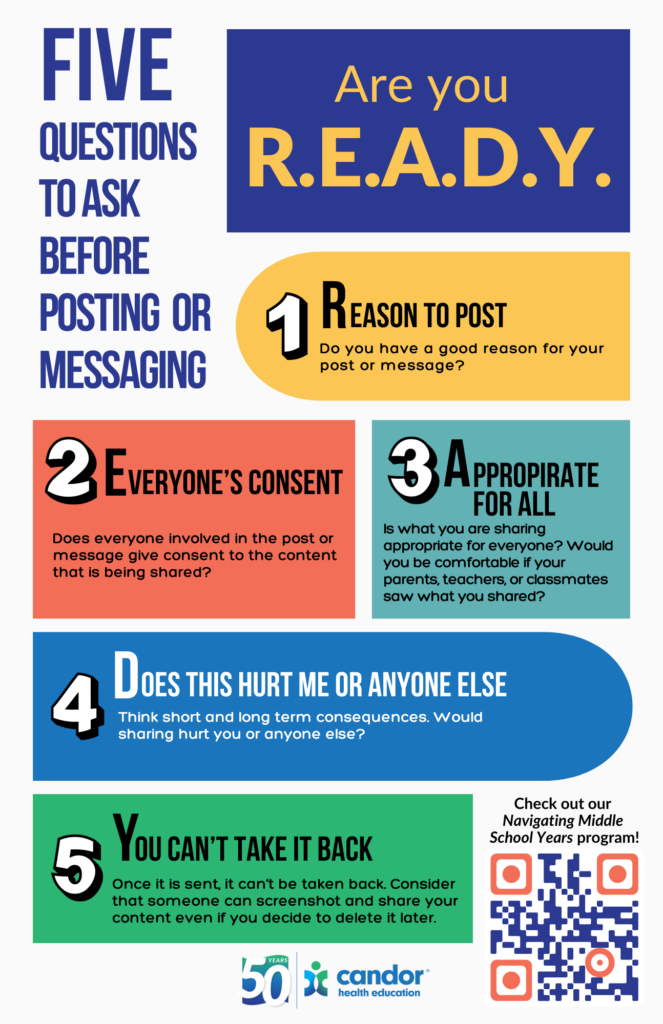
One helpful strategy is the READY framework. Encourage your child to ask themselves these five questions before they hit “send” or “post.”
R: Reasons to Post
Do I have a good reason for posting this?
E: Everyone’s Consent
Do I have permission from everyone involved to share this?
A: Appropriate for All
Would this be appropriate for anyone and everyone to see?
D: Does This Hurt Me or Anyone Else?
Could this message embarrass, harm, or upset someone—including me?
Y: You Can’t Take It Back
Do I understand that once something is posted, it may be shared and is no longer under my control?
Walk through these steps with your child and talk together about what makes a good reason to send or post a message. Make sure they understand what consent means in the digital world. Discuss how messages and social media posts can unintentionally hurt others, even when that wasn’t the original intention. Remind them that if their honest answers suggest someone could be hurt, it’s better not to post at all.
Quite honestly, the READY strategy is a good reminder for everyone—teens and adults alike—to pause and think before posting online.


Co written by: Katie Gallagher, Director of Education & Betty Barsley-Marra, Health Educator

